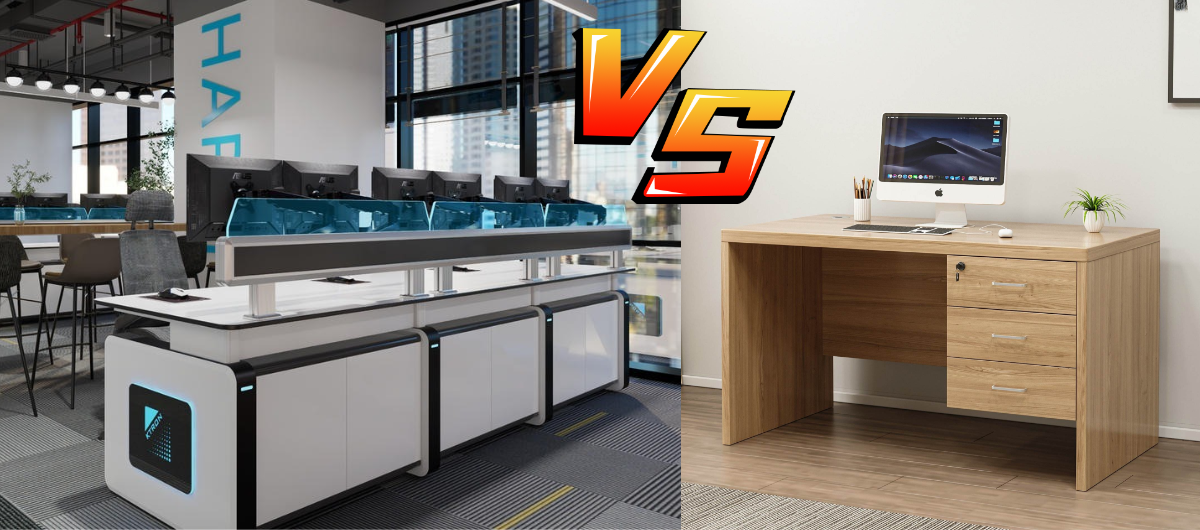
Consoles and operating tables are high-end equipment designed for complex tasks in professional environments, emphasizing functional integration, ergonomic design and long-term stability. They are usually used in mission-critical and 24-hour working environments. Ordinary desks mainly meet daily office needs. They have simple functions and lightweight designs, and are suitable for ordinary working scenes such as home or office. Depending on actual needs, choosing the right desktop device can gre
In the modern office environment, consoles, operation desks and ordinary desks play different roles. They differ significantly in design purpose, functional requirements, material selection, ergonomics, and more. Here are their main differences:
1. Design purpose
console/operating station
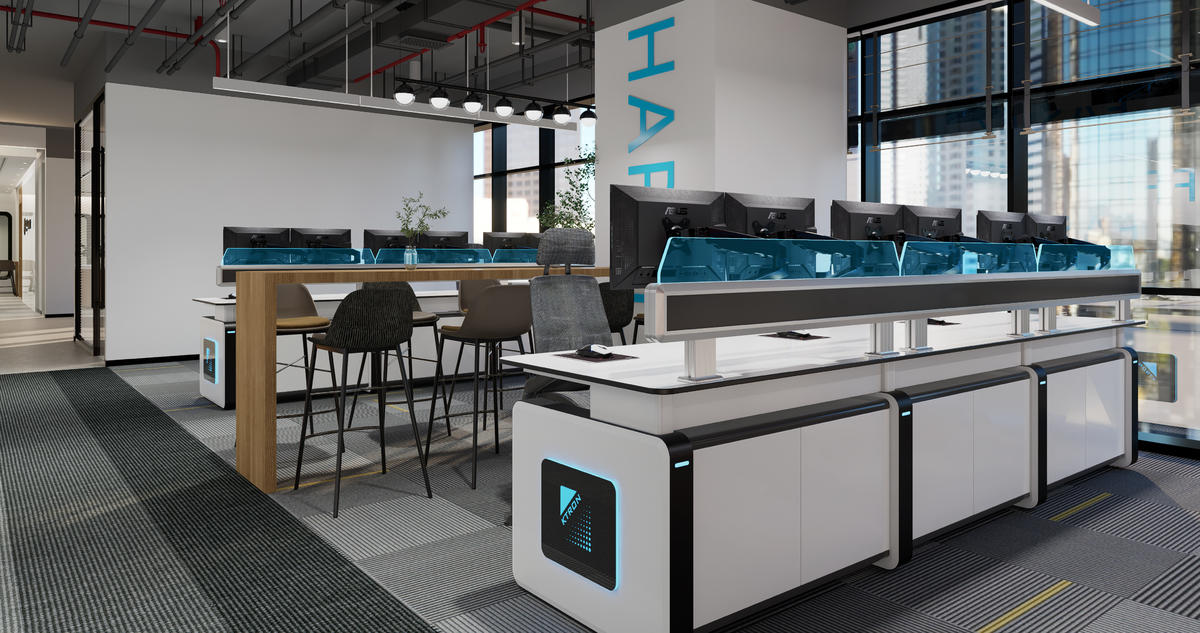
- Consoles and operating stations are devices designed for specific work scenarios and are mainly used in environments that require efficient integration of multiple devices, real-time monitoring and operation. For example, consoles are widely used in command centers, monitoring centers, dispatch centers and other places. Its design focuses on enhancing work efficiency, ensuring operational safety, supporting 24/7 high-intensity work, and taking into account the comfort of long-term operation.
- Design goal: integrate complex functions, improve work efficiency and operational accuracy.
- Application areas: financial command center, energy dispatch center, railway dispatch center, etc.
Ordinary desk
- The design of ordinary office desks pays more attention to meeting the basic needs of daily office and home environments, and is suitable for scenarios that do not require high-intensity equipment integration. Its design is simple, and its functions are mainly focused on providing a stable working surface and supporting basic office equipment (such as computers, documents, etc.).
- Design goal: Provide a comfortable basic work space.
- Application areas: offices, home offices, classrooms, etc.
2. Functionality
console/operating station
- The console and operation desk integrate multiple high-function modules to meet complex operations and multi-tasking needs. They are often equipped with space for equipment installation, effective cable management systems, multi-screen displays, data transmission interfaces, etc. to support continuous monitoring and operational tasks.
- Multi-functional integration: equipment support, cable management, data processing, multi-screen display, control system, etc.
- Dedicated design: supports centralized equipment management, real-time information feedback and intelligent scheduling.
Ordinary desk
- The function of an ordinary desk is relatively simple, mainly used to provide a stable surface to support office equipment, and most desktops do not integrate more equipment or special functions. Common functions include storing documents, computer operations, and simple daily tasks.
- Basic functions: Support computers, file management, basic office equipment, etc.
- Single-function: No special device integration or multitasking requirements.
3. Ergonomics
console/operating station
- The design of consoles and operating tables attaches great importance to ergonomics, taking into account the comfort of long-term work. They are usually equipped with adjustable height systems, electric lifting platforms, etc. to ensure that operators can maintain the best working posture and reduce physical burden.
- Ergonomics: Meets different operator height and sitting/standing posture needs, reducing fatigue.
- Exquisite design: meets long-term operation requirements, focusing on comfort and efficiency.
Ordinary desk
- Although ordinary office desks also focus on comfort, their design is more to meet general usage needs. They usually provide a fixed height and rarely involve height adjustment or special comfort design. Its focus is mainly on meeting the basic needs of the office environment.
- Ergonomics: relatively simple, mainly providing daily comfortable use.
- Simple design: more suitable for home or general office use, less focused on long-term work requirements.
4. Materials and Structure
console/operating station
- Consoles and operating tables usually use high-strength, durable materials, such as metal, reinforced plastic, aluminum alloy, etc. These materials ensure that the equipment can withstand high-intensity use for a long time while preventing wear, vibration and other effects on the equipment. The structural design focuses on load-bearing and equipment integration capabilities.
- Material: metal, aluminum alloy, reinforced plastic and other high-strength materials.
- Structure: Stable and strong load-bearing capacity, ensuring long-term high-intensity use.
Ordinary desk
- The materials of ordinary office desks are relatively simple, usually using wood, composite materials, etc., focusing on aesthetics and comfort. Its design is simple and mainly meets the daily needs of ordinary office or home environments. Its structural strength is not as strong as that of the console.
- Materials: Common materials such as wood, plastic, composite materials, etc.
- Structure: Relatively simple and suitable for daily office work.
5. Customization
console/operating station
- The design of consoles and operating tables is often customized according to customers' specific needs, including size, shape, functional modules, colors, etc., to ensure that they can perfectly match different working environments and operational needs.
- Customization: Size, shape, and functional modules are highly customized to meet specific needs.
- Flexibility: Design according to customer’s work scenarios and equipment needs.
Ordinary desk
- While there are customization options for regular office desks, they are usually designed primarily based on personal preference, home style, and space size. Customization options are relatively basic, and functionality isn't as flexible as the console.
- Customization: Customize styles, colors, materials, etc. according to personal needs.
- Simple functions: Customization focuses more on appearance and comfort, with fewer functional modules.
6. Technology integration
console/operating station
- Consoles and operation desks usually integrate a large number of advanced technologies, such as intelligent control systems, automation equipment, data interfaces, monitoring systems, etc., to improve operational efficiency, reduce human errors, and support more complex task processing.
- Technology integration: intelligent control, automation equipment, data management and transmission interfaces, etc.
- Systematization: A highly integrated operating platform supports multi-tasking and real-time updating of information.
Ordinary desk
- Ordinary desks generally do not involve complex technology integration, only the most basic simple electronic equipment such as power sockets and lamps. They focus more on support of day-to-day office activities rather than high-tech integration.
- Technology integration: simple power sockets, light fixtures, etc.
- Functionality: Most ordinary office desks do not have advanced technology integration and have simple functions.
7. Cost difference
console/operating station
- Due to their highly customized design, advanced technology integration, and use of high-strength materials, consoles and workstations typically cost much more than a regular office desk.
- Higher cost: High degree of customization, complex design, strong durability, higher cost.
Ordinary desk
- The cost of an ordinary office desk is relatively low, mainly because its design and manufacturing process are relatively simple, and the materials used are relatively basic.
- Lower cost: simple design, common materials, and low production cost.
Conclusions
Consoles and operating tables are high-end equipment designed for complex tasks in professional environments, emphasizing functional integration, ergonomic design and long-term stability. They are usually used in mission-critical and 24-hour working environments. Ordinary desks mainly meet daily office needs. They have simple functions and lightweight designs, and are suitable for ordinary working scenes such as home or office. Depending on actual needs, choosing the right desktop device can greatly improve work efficiency and comfort.