Naiman Banner Airport is a regional aviation hub where air traffic coordination and ground movement management must operate in close synchronization. As the complexity of airport operations increases, the control room environment plays a critical role in ensuring safe, stable, and efficient flight handling.
For this project, KtronSpace delivered a customized control room console solution designed for both ACC (Airspace Control Center) and TCC (Traffic Control Center) operations.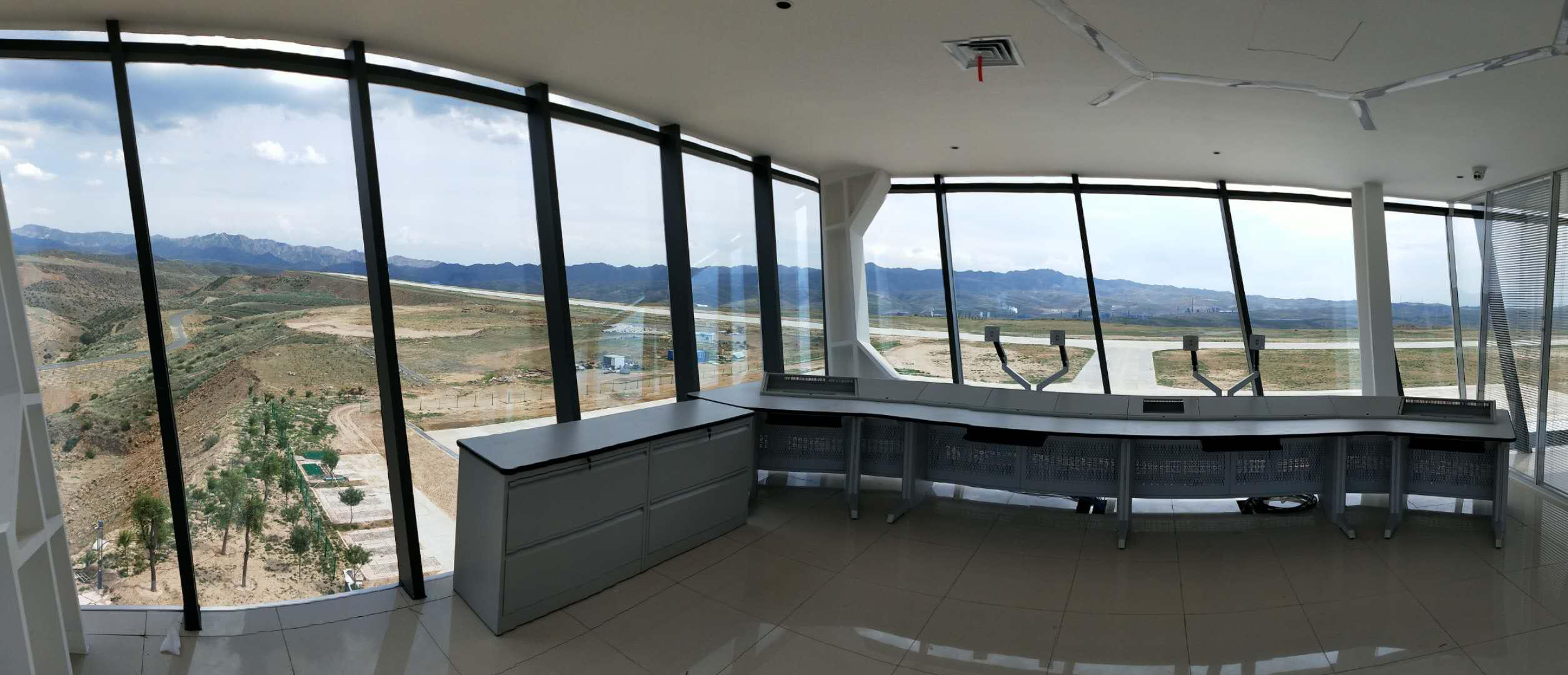
At Naiman Banner Airport, airspace control and ground traffic coordination are tightly connected. Operators are responsible for monitoring aircraft movements, managing runway utilization, coordinating ground services, and maintaining constant communication with multiple operational teams.
To support this workflow, the control room was designed as a unified operational environment rather than separated functional rooms.
This approach allows ACC and TCC teams to work within a shared visual and communication framework, improving coordination speed and reducing operational delays.
The console layout was planned to ensure that each operator position supports clear visibility, efficient access to systems, and smooth interaction between adjacent working stations.
Airport control environments operate under continuous pressure, requiring furniture systems that can support long-hour use and complex equipment integration.
The control room console solution for Naiman Banner Airport was designed with the following priorities:
Rather than focusing on appearance alone, the system was developed to support real operational behavior inside the control room.
In ACC and TCC environments, decision-making depends on how quickly information can be accessed and shared between operators.
The console configuration helps maintain a stable operational flow where information is not isolated to individual positions, but naturally shared across the control room environment.
This improves situational awareness and supports faster response during dynamic airport operations.
Regional airports such as Naiman Banner often require flexible infrastructure that can adapt to future operational changes.
The control room console system was designed with modular principles, allowing adjustments in layout, seating capacity, and equipment configuration as airport operations evolve.
This ensures the control room remains functional and scalable without requiring complete structural redesign in the future.
While this project was delivered for Naiman Banner Airport, similar control room console systems are widely applied in:
Each environment shares a common requirement: stable, organized, and efficient operator workspaces.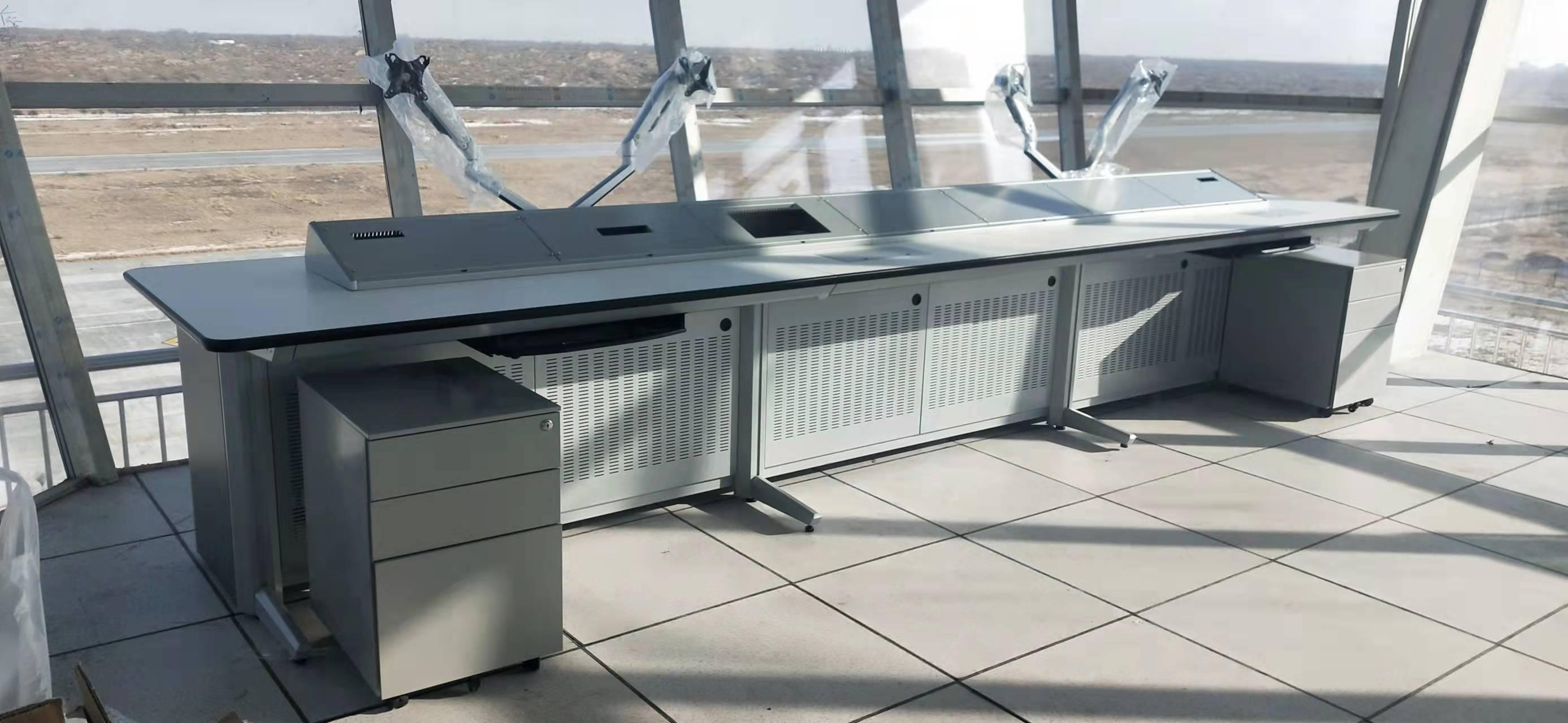
A control room console provides operators with a structured workspace to manage multiple systems, improve coordination, and maintain continuous monitoring of airport activities.
A unified layout improves communication efficiency between airspace control and ground traffic teams, reducing delays and improving operational coordination.
Yes. Each airport has different operational workflows, and control room layouts can be designed according to space, staffing, and system requirements.
Yes. They are designed for continuous operation environments where reliability, ergonomics, and system organization are essential.
At KtronSpace, control room design focuses on how operators interact with information systems in real operational conditions.
The Naiman Banner Airport ACC / TCC project demonstrates how a well-structured control room console system can support coordination, visibility, and operational stability in aviation environments.
As airports continue to modernize their operational infrastructure, KtronSpace remains committed to delivering customized control room console solutions that support efficiency, scalability, and long-term reliability.


